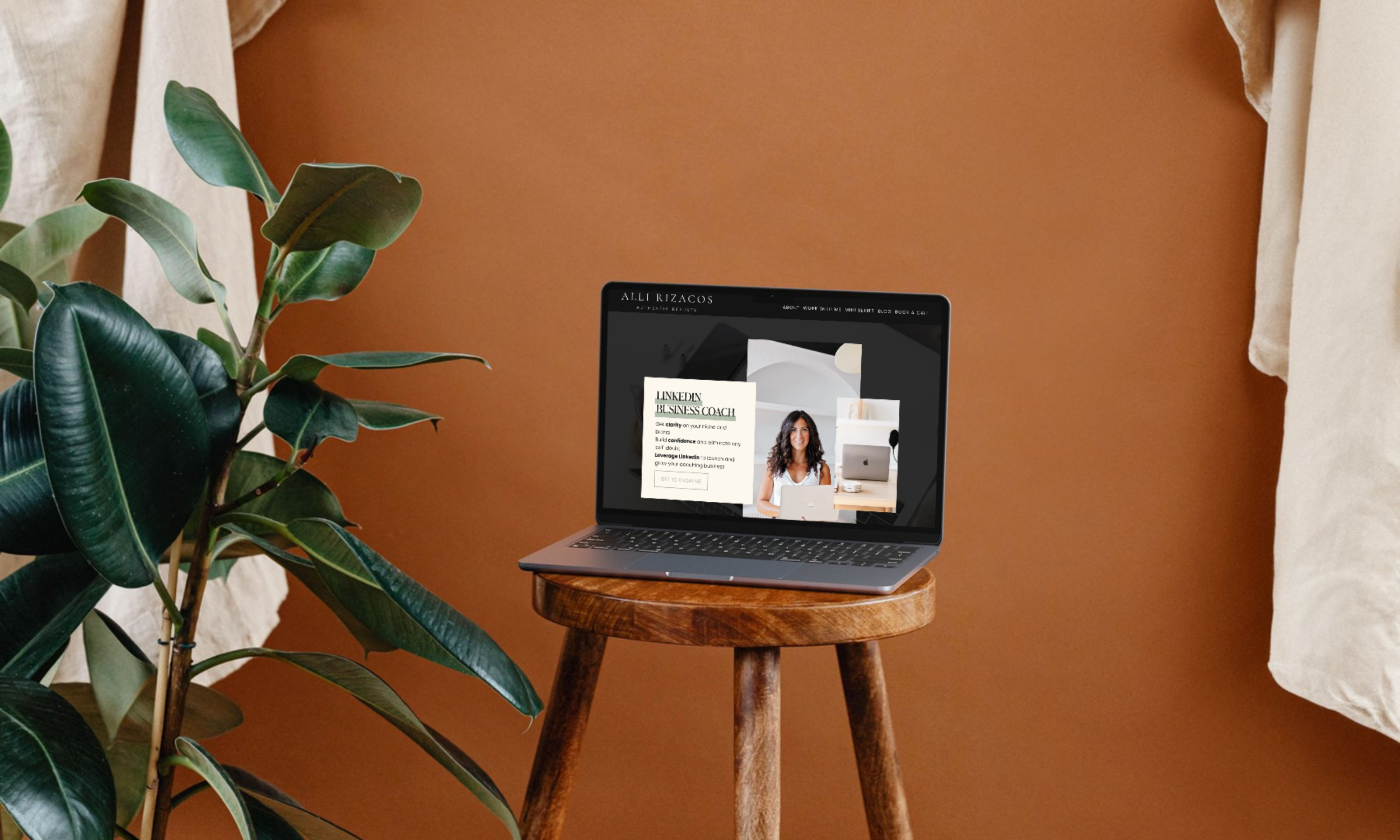
A coaching website needs four pages: Home, About, Work With Me, and Contact. Add a testimonial on every page, a clear niche, one signature offer, and a booking calendar, and you have a site that builds trust before anyone gets on a call. Most coaches try to do far more than this, and the extra pages usually make the site harder to trust, not easier.
Here is what each page needs to do, and the mistakes that keep coaching websites from turning visitors into clients.
Why a Coaching Website Is Different
When someone hires a coach, they are not buying a product. They are choosing a person to trust with something personal, like a career change, a big decision, or a hard season of life. That means your website has one main job: help a stranger decide that you are someone they can relate to and rely on.
That changes how you build it. A coaching site is not a brochure. It should read like a first conversation with you.
The Four Pages Every Coach Needs
Home: Say who you help and what changes for them. A visitor should know within seconds whether the site is for them. Put a testimonial near the top.
About: This is where trust gets built, and it is the page most coaches get wrong.
Work With Me: Explain how you help and what working together looks like. Present one clear way to start, not a menu of ten.
Contact: Keep it simple, with a way to reach you or book a time.
When a coach asks me what pages they need, this is where I start. You can add a blog or resources later, but these four are the foundation.
Write Your About Page as a Story, Not a Resume
The biggest mistake I see on a coach's About page is treating it like a resume. Coaches feel they need to list every credential, certification, and job title to prove they are qualified.
People work with people they trust and relate to, and that matters even more in coaching. Being relatable is one of the most valuable things you can do in your business. Telling your story is one of the best ways to help someone feel connected to you. Why did you start coaching? What have you lived through that helps you understand your clients? Share that first. Your credentials can sit quietly in the background.
One Signature Offer Beats Five Packages
Many coaches want to offer four or five ways to work with them, or at least three. I understand the instinct, but it works against you.
In coaching, you are not looking for forty or fifty clients. If you work one-to-one, you will usually have three or four clients at a time. You don't need a wide menu. You need a clear one. I recommend a single signature offer, because it helps a potential client understand exactly what you do without feeling overwhelmed by options.
I also recommend against charging hourly. It lowers the commitment a client feels toward working with you. A signature offer asks for a real commitment, and it signals that you are focused on results.
Should a Coach Show Pricing on Their Website?
In my experience, almost 98% of the coaches I work with leave pricing off their site. The goal is to get people to book a discovery call. On that call, you walk through your process and how you work, and then you share the investment options. Pricing means more once someone understands the value of what you do.
This is different from some other industries, but for coaching it works. Pricing on a page, with no context, invites comparison. A conversation lets you explain why your approach is worth it.
Make the Next Step Easy
For most coaches, the next step can be a simple contact form. Someone fills it out, and you get in touch.
One thing that works especially well is a booking calendar, where people can book a time with you directly. A calendar also helps you filter. You can structure it with a few questions, so you learn who is serious about an initial call and who is just fishing around. That saves you time and protects the number of client slots you have.
Put Testimonials on Your Home Page, Not on a Separate Page
Many people want their testimonials on a separate page. I would not do that. Nothing works better than putting testimonials directly on your home page, because it is the first thing people see.
The goal of your website is to build trust, not to sell. A testimonial shows that your work has helped real people, in their own words. The best approach is to weave them throughout the site, ideally one on each page, rather than tucking them away where most visitors never click.
Niche Down, or You Will Look Generic
The biggest issue I see with coaches who are starting out is that they are afraid to niche down. When you don't, you look generic, and when you look generic, you rarely connect with anyone.
"I help you with your career" is one of the vaguest things a coach can say. Compare that to helping someone in their 40s make a career transition, or helping someone move from a director role to a vice president role. Those statements are specific, and they connect with the right person right away.
You cannot relate to everyone. When you try, you don't really connect with anyone. Being specific is not limiting. It is what makes the right client feel seen.
Newsletters Yes, Lead Magnets No
A newsletter makes a lot of sense for coaches. With most high-ticket offers, your audience is not ready to buy from you right away. A newsletter lets you share your stories and experience over time and build trust until they are.
Lead magnets are different. I tend to be against them for coaches. They are often fluff content, and they come across as pushy, since they are indirectly a sales tool. It is a personal view, and it is what I recommend to my clients.
Common Mistakes Coaching Websites Make
Writing the About page like a resume instead of telling a story
Offering four or five packages instead of one signature offer
Listing hourly rates, which lowers client commitment
Showing pricing before a discovery call, when the conversation should come first
Staying generic instead of choosing a specific niche
Putting testimonials on a separate page instead of on the home page and throughout the site
Building lead magnets that feel like a sales pitch
What This Looks Like in Practice
I have built websites for coaches at every stage, from people launching their first practice to former corporate leaders starting a new chapter. These principles hold across all of them. You can read how it came together for one coach in the [case study link].
Related Reading
When to Hire a Web Designer | How a Freelance Web Designer Works | Squarespace SEO Checklist

About Me
I'm Shawn, a Brand Strategist and Squarespace Web Designer based in New York, with over 20 years of experience in marketing, sales, and design. I help coaches build websites that tell their story and give the right clients a reason to reach out. If you are ready for a site that sounds like you, let's get on a call.
Frequently Asked Questions
-
Four: Home, About, Work With Me, and Contact. Testimonials work best placed on every page, starting with the home page, rather than on a page of their own.
-
Usually not. Most coaches do better sending visitors to a discovery call, where they can explain their process and share investment options in context.
-
One signature offer. It gives potential clients a clear understanding of how to work with you and avoids overwhelming them with options.
-
No. A newsletter is a better way to build trust over time. Lead magnets tend to feel like indirect sales pitches.